Complete Education Visa Guide
The Non-Immigrant ED visa is Thailand's long-stay option for foreign nationals genuinely enrolled in an approved educational programme, from Thai language schools and university degrees to Muay Thai training and religious studies. No minimum age, no income requirement, no financial threshold. If you have an acceptance letter from an approved institution, you qualify.
The information on this page is provided for general guidance only. Thai immigration regulations change frequently. Always verify current requirements with the Thai embassy or consulate in your country and consult a qualified immigration professional for your situation.
Who Is the ED Visa For?
The ED visa is for those genuinely enrolled and actively studying, not for those seeking a backdoor long-stay without real educational commitment.




The ED visa is not for
What Can You Study on an ED Visa?
The ED visa covers a wider range of educational activities than most people expect. The key requirement is that the institution and programme must hold Ministry of Education approval.
Bachelor's, master's and doctorate programmes at Thai universities. Students at bachelor level or above qualify for the ED PLUS visa with significant additional benefits.
Thai language courses at accredited private language institutes. Most commonly used ED visa category. Maximum 12 months per visa: must exit and reapply to continue.
Accredited English, Japanese, Chinese, Korean and other foreign language programmes at registered language institutes. Maximum 12 months per visa: must exit and reapply to continue.
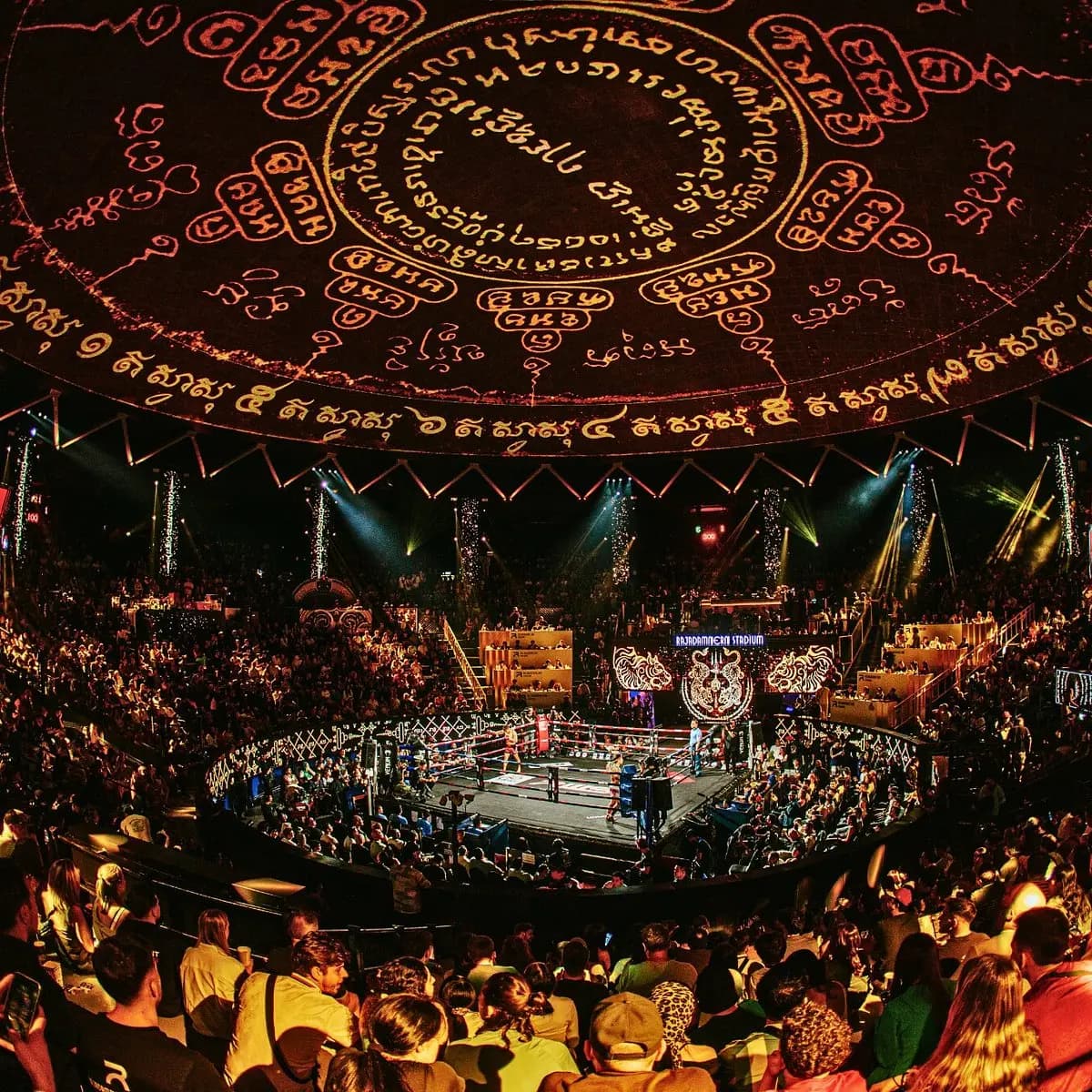
Training at a Muay Thai gym specifically licensed by the Ministry of Education or Sports Authority. Since 2024 soft power reforms, Muay Thai is an officially recognised ED visa activity. The gym must hold the correct licence. This is a separate recognition from the DTV's own Soft Power category, both cover Muay Thai but through different visa types.
Ordained monks and religious students studying at approved Buddhist temples or religious institutions. One of the oldest and most established ED visa categories.
Internships and training as part of an academic curriculum, or training within government organisations and international organisations in Thailand. Must be linked to an official academic programme.
Yoga teacher training, traditional Thai massage certification, culinary arts and other wellness education at institutions approved by the Thai Ministry of Education.
Foreign children aged 7 and above studying at a Thai international school require their own ED visa, arranged through the school's admissions office. One accompanying parent or legal guardian can apply for a Guardian Visa (Non-Immigrant O), renewed alongside the child's visa each year.
See our Schools & Families guideDiploma-level vocational and technical programmes below bachelor's degree level are a distinct ED visa category, separate from both language schools and full university degrees. The institution must hold Ministry of Education approval to sponsor this category.
Key insight
Before enrolling in any programme to obtain an ED visa, verify that the institution is officially registered and holds Ministry of Education approval to sponsor ED visas. Not all language schools and Muay Thai gyms are registered. Enrolling in an unregistered institution means you cannot obtain an ED visa.
ED Visa vs ED PLUS: What Is the Difference?
Most people are not aware that Thailand offers two distinct education visa types. Understanding which one applies to your situation can make a significant practical difference.
Standard ED Visa
For language schools, Muay Thai, religious studies and all non-university programmes
ED PLUS Visa
Exclusively for students enrolled at Thai universities at bachelor's degree level or above
Which one do you need? If you are enrolling at a Thai university at bachelor level or above: ED PLUS (your university guides you through the process). If you are enrolling in a language school, Muay Thai programme or any other non-university programme: Standard ED visa.
Eligibility Requirements
Key insight
The ED visa has no age minimum, no income requirement and no financial threshold. The single qualifying condition is acceptance into an approved educational programme at a recognised Thai institution.

Education Visa Costs
Government application fee
~2,000–4,000 THB (~€55–110)
Varies by embassy and nationality.
90-day extension (standard ED, repeated as needed)
1,900 THB per extension (~€50)
Standard ED visa holders (language schools, Muay Thai, religious studies, internships) extend in 90-day increments, paying this fee each time, for as long as they remain enrolled. This can mean several extensions per year, not just once. ED PLUS holders (university) can instead receive up to a full year at once, with the university managing the submission; the same government fee likely still applies each time, though this should be confirmed with your university.
Re-entry permit, single
1,000 THB (~€27)
Per departure from Thailand.
Re-entry permit, multiple
3,800 THB (~€100)
Unlimited exits during current stay.
Health insurance (recommended)
~25,000–60,000 THB/year
Not legally required for the Education Visa. Strongly recommended.
See insurance options →Document translations (if applicable)
€50–150 per document
For non-English, non-Thai documents requiring certified translation.
Professional application assistance (recommended)
Variable
Some applicants use a visa consultant to reduce rejection risk.
Contact usTuition and accommodation are not included, and vary enormously by institution, city, programme duration and category (school fees, gym fees, temple donations, etc.). Confirm exact visa fees with your Thai embassy or consulate. TM30 and 90-day reporting have no government fee if filed yourself.
Required Documents

- ✓Valid passport: 6+ months validity, 2 blank pages, copy of all pages
- ✓Recent passport photo: white background, neutral clothing, last 6 months
- ✓Completed Non-Immigrant ED visa application form
- ✓Official acceptance/admission letter from approved Thai institution: must be on institutional letterhead confirming programme name, start date and duration
- ✓Bank statement: requirements vary significantly by embassy. Some in-country applications require no proof of funds at all. Embassies abroad typically ask for 50,000–100,000 THB equivalent, not a fixed amount that scales with your intended stay length. Confirm the exact figure with your specific embassy or school.
- ✓Proof of address in country of application (if requested by embassy)
- ✓University registration certificate or student ID (if already enrolled)
- ✓Academic transcripts from previous institution (if required)
- ✓Official enrolment certificate from Ministry of Education or Sports Authority licensed Muay Thai gym
- ✓Proof that the gym holds the correct ED visa sponsorship licence
- ✓Official confirmation letter from the approved temple or religious institution
- ✓Proof of your role or course of study within the institution
- ✓Letter confirming the internship or training is linked to an official academic programme
- ✓Documentation from the sponsoring organisation or government body
How to Apply

Research and select an institution officially registered with the Thai Ministry of Education with correct ED visa sponsorship approval. Enrol in your chosen programme and obtain your official acceptance letter on institutional letterhead.
This initial step is the same whether you're applying for the standard ED or ED PLUS, the difference between the two only affects what happens after you arrive. Submit your Non-Immigrant ED visa application at the Thai embassy or consulate in your country. Processing typically takes 5 to 10 business days. On approval you receive a single-entry Non-Immigrant ED visa stamp valid for 90 days from the date of issue, meaning you must enter Thailand within that 90-day window. This is different from your permission to stay once you arrive, covered in the next step.
Enter Thailand within the 90-day window from Step 2. On arrival, immigration issues you a new, separate 90-day permission to stay, counted fresh from your entry date, not from when your visa was issued. Register your address with your landlord within 24 hours for the TM30. Begin attending your programme immediately.
Before your 90-day permission to stay expires, visit your local Thai immigration office with your passport, TM30 receipt, proof of enrolment and 1,900 THB extension fee. Extensions are typically in 90-day increments for language school students, up to 12 months total. Note: this stay extension (form TM7) is separate from the 90-day address report (form TM47) described elsewhere on this page. Both use a 90-day cycle but serve different purposes, missing the extension risks your visa status, while missing the address report only results in a fine, and you'll need to manage both throughout your stay.
Report your address to Thai immigration every 90 days in person, by post or online. Your institution may assist but the obligation is yours.
See our 90-day report guide →If you hold a standard ED visa and plan to leave Thailand, obtain a re-entry permit before departure. Single: 1,000 THB. Multiple: 3,800 THB. Without a re-entry permit your visa is cancelled on exit. ED PLUS holders are exempt.
Language school and private institution students cannot exceed 12 months per visa. Before the 12-month mark, exit Thailand and apply for a new ED visa abroad. Plan this exit in advance: do not wait until the last day.
Is the ED Visa Right for You?

Ready to Apply for a Thailand Education Visa?
Whether you are planning to study Thai at a language school, train at a licensed Muay Thai gym, enrol in a university degree or pursue any other approved educational programme, we can help you identify registered institutions eligible for ED visa sponsorship and connect you with trusted immigration specialists.