Getting Around Thailand
Bangkok has a metro. Chiang Mai runs on scooters. Islands run on two wheels. The right transport depends entirely on which city you live in and how you live. Here is everything you need to know before you arrive.
Your Transport Options in Thailand
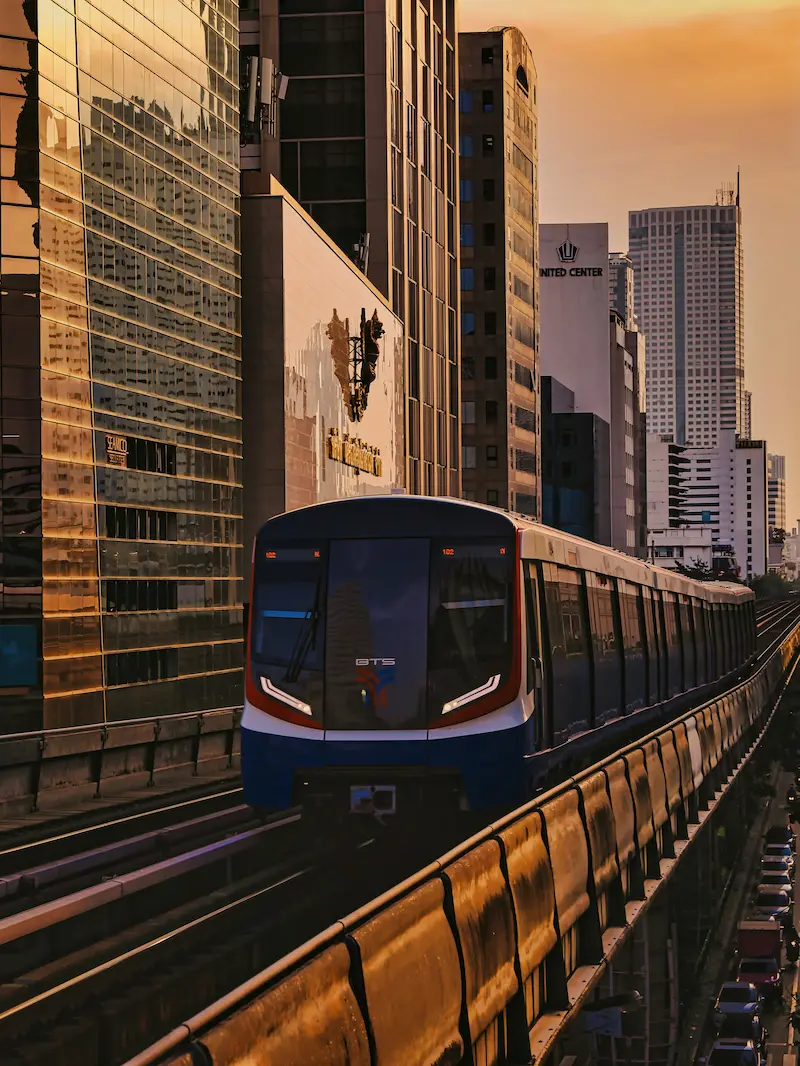
Bangkok has two urban rail networks. The BTS skytrain runs above ground and covers the main expat neighbourhoods including Sukhumvit, Silom, Ari and Ekkamai. The MRT metro runs underground and connects several additional areas. Both are modern, air-conditioned and reliable. BTS fares in 2026 range from 17 to 65 baht per trip, roughly €0.50 to €1.80. A stored-value Rabbit Card saves time at ticket machines. Outside Bangkok, public transport is extremely limited or non-existent.
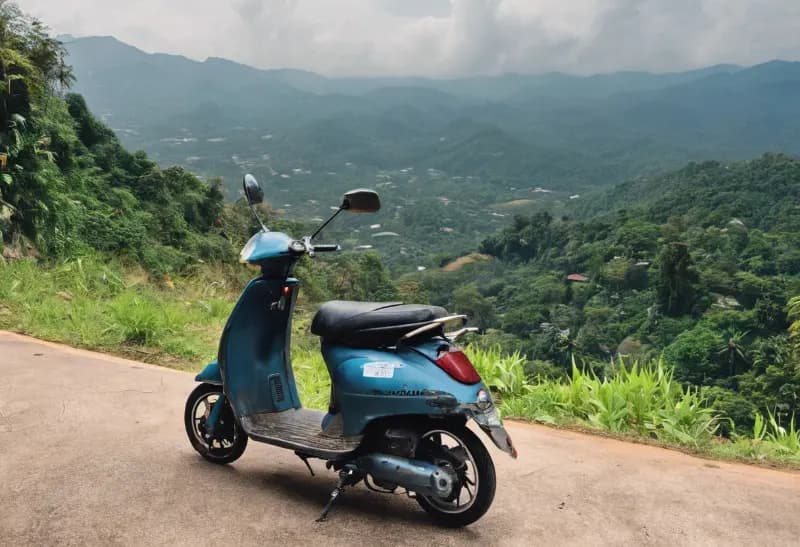
The scooter is the default transport solution for expats outside Bangkok. Affordable, practical and gives you complete freedom of movement. Monthly rental for a standard 125cc scooter costs €50 to €110. Daily rates range from €4 to €10. The Honda Click 125cc is the most common and reliable choice. A valid motorcycle driving licence and international driving permit with a motorcycle category are required by law. A standard car licence is not sufficient to ride a scooter, even with a matching IDP. Without the correct documents, you risk fines and your rental insurance will be void in case of an accident.
A car gives you maximum comfort and flexibility, especially for families or rainy season driving. Monthly rental for a standard economy car starts at around €320 from local companies, including basic insurance. In Bangkok, a car is generally not recommended for daily use. Traffic is heavy and parking is difficult. Outside Bangkok, a car is much more practical, particularly in Phuket and Hua Hin where distances between areas are larger.
Ride-hailing apps have replaced traditional taxis as the default for most expats. Both Grab and Bolt show the price upfront before you confirm, which eliminates fare disputes. Grab has a wider network across Thailand. Bolt is consistently 10 to 25 percent cheaper for equivalent trips. A 10km Bangkok trip costs approximately €3 to €5. Install both apps and check both for each trip.
Traditional metered taxis are widely available in Bangkok and among the cheapest in Southeast Asia. A 10km trip in good traffic costs around €2.60. Always insist on the meter and refuse any flat rate offer before the journey starts. Be alert to common scams such as drivers claiming the meter is broken or quoting an inflated flat fare. Where possible, prefer Grab or Bolt, since the price is shown upfront in the app before you commit to the ride. Outside Bangkok, taxis work very differently. Phuket and Koh Samui have local taxi associations with fixed prices significantly higher than Bangkok rates. In all cities outside Bangkok, ride-hailing apps are generally better value.
The Right Transport for Your City
Here is the simplest breakdown of what works best in each major expat city.

The BTS skytrain and MRT metro are your primary transport. Choose your apartment based on proximity to a station and you will rarely need anything else for daily life. Use Grab or Bolt for areas not on the network or late at night. A scooter is possible but not recommended for daily commuting given the traffic density.
Primary
BTS skytrain + MRT metro
Secondary
Grab or Bolt
Avoid
Scooter for daily commute
Pro tip
Live within 5 minutes of a BTS or MRT station
Driving in Thailand
Licences, road safety and the rules worth knowing before you get behind the wheel.
Thailand legally requires all foreign drivers to carry both their original driving licence and an international driving permit. An international driving permit (IDP) is not a replacement licence. It is an official translation of your home country licence into multiple UN-recognised languages and must be carried alongside the original at all times. Obtain your IDP before leaving your home country. Processing takes a few days. Do not leave it until the last minute.
Key insight
Without a valid international driving permit, your scooter or car rental insurance is void in case of an accident, even if you paid for it.
For expats staying long term, converting to a Thai driving licence is the better option. It removes the need to renew your international driving permit and is accepted everywhere in Thailand. Key requirements in 2026: written theory test is now mandatory with a 90% pass mark (45 out of 50 questions). Practical test may be required depending on the DLT office. A valid visa is required. Tourist visa holders cannot apply.
Key insight
The theory test was made mandatory in 2024. Many expats underestimate the difficulty. The questions cover Thai road signs, rules and situations. Preparation is essential.
Thailand has one of the highest road fatality rates in the world. Most accidents involving expats happen on scooters, particularly in the first weeks after arrival when roads and traffic patterns are unfamiliar. Wear a helmet at all times. It is both legally required and genuinely life-saving. Avoid riding at night outside urban centres. Do not ride after drinking. Roads in some areas flood significantly during monsoon season.
Key insight
Wear a helmet. Always. Non-negotiable.
Thailand drives on the left. Speed limits are 90 km/h on open roads and 60 km/h in urban areas. Traffic police checkpoints are common, particularly around major holidays. Carry your licence and IDP or Thai licence at all times. In Bangkok, avoid driving during peak hours (7 to 9am and 5 to 8pm). Traffic is significantly worse than outside these windows.